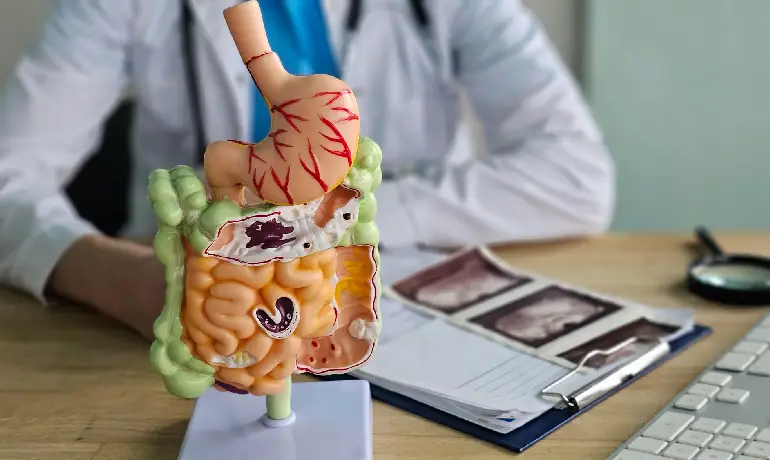
Endoscopy vs Colonoscopy: Which Test Is Right for You?
Digestive problems such as persistent acidity, abdominal pain, difficulty swallowing, unexplained weight loss, changes in bowel habits, or blood in the stool may require a closer evaluation of the digestive tract. Two commonly recommended diagnostic procedures are endoscopy and colonoscopy.
Although both procedures use a flexible camera to examine the digestive system, they are used to evaluate different parts of the gastrointestinal tract and diagnose different conditions. Understanding the difference between endoscopy vs colonoscopy can help you know what to expect when your gastroenterologist recommends one of these tests.
What Is an Endoscopy?
An upper gastrointestinal endoscopy, commonly called an upper GI endoscopy or simply an endoscopy, is a procedure used to examine the upper part of the digestive system.
During the procedure, a thin, flexible tube with a small camera is gently passed through the mouth. The camera allows the doctor to examine the:
- Food pipe (oesophagus)
- Stomach
- First part of the small intestine (duodenum)
An endoscopy may be recommended when symptoms suggest a problem in the upper digestive tract.
Why Is an Endoscopy Done?
A gastroenterologist may recommend an endoscopy to investigate symptoms such as:
- Persistent acidity or heartburn
- Difficulty or pain while swallowing
- Persistent upper abdominal pain
- Nausea or vomiting
- Unexplained weight loss
- Gastrointestinal bleeding
- Black or tarry stools
- Suspected stomach ulcers
- Persistent indigestion
An endoscopy can help identify conditions such as gastritis, stomach ulcers, acid reflux-related changes, oesophageal problems, and certain abnormalities of the upper digestive tract.
Doctors can also take a small tissue sample, known as a biopsy, during an endoscopy when required.
What Is a Colonoscopy?
A colonoscopy is a diagnostic procedure used to examine the lower part of the digestive tract, particularly the large intestine or colon.
During a colonoscopy, a thin, flexible tube with a camera is gently inserted through the anus and guided through the rectum and colon. This allows the doctor to examine the lining of the large intestine.
Why Is a Colonoscopy Done?
A colonoscopy may be recommended for symptoms or conditions such as:
- Blood in the stool
- Persistent changes in bowel habits
- Chronic diarrhoea or constipation
- Unexplained abdominal pain
- Unexplained weight loss
- Suspected inflammatory bowel disease
- Unexplained gastrointestinal bleeding
- Screening for colorectal cancer
- Removal or evaluation of intestinal polyps
One important advantage of colonoscopy is that doctors can identify and sometimes remove polyps during the same procedure. Tissue samples can also be taken for laboratory examination if necessary.
Endoscopy vs Colonoscopy: Key Differences
While both procedures use a flexible camera, their purpose and area of examination are different.
| Feature | Endoscopy | Colonoscopy |
|---|---|---|
| Main area examined | Upper digestive tract | Large intestine/colon |
| Route | Through the mouth | Through the anus |
| Areas examined | Oesophagus, stomach and duodenum | Rectum and colon |
| Common symptoms | Acidity, swallowing difficulty, upper abdominal pain | Blood in stool, bowel changes, lower abdominal symptoms |
| Common uses | Ulcers, gastritis, reflux-related problems | Polyps, bowel disease, colorectal cancer screening |
| Preparation | Usually fasting before the procedure | Bowel cleansing is generally required |
| Biopsy | Can be performed when required | Can be performed when required |
| Polyp removal | Not the primary purpose | Polyps can often be removed during colonoscopy |
Endoscopy or Colonoscopy: Which Test Do You Need?
The answer depends mainly on your symptoms, medical history, age, risk factors and the part of the digestive tract that needs to be examined.
For example, if you have persistent heartburn, difficulty swallowing, or recurring upper abdominal discomfort, your doctor may consider an upper GI endoscopy.
On the other hand, symptoms such as blood in the stool, persistent changes in bowel habits, or concerns about the colon may require a colonoscopy.
In some situations, both procedures may be recommended if symptoms could involve different parts of the gastrointestinal tract.
It is important not to choose between an endoscopy and colonoscopy based only on symptoms found online. A gastroenterologist can determine which investigation is appropriate after evaluating your symptoms and medical history.
How Should You Prepare for Endoscopy?
Preparation for an endoscopy is generally straightforward. Your doctor will provide specific instructions, but you may be asked to avoid food and liquids for a certain period before the procedure.
Tell your doctor about any medications you take, particularly blood thinners, diabetes medications, or other medicines that may require special instructions before the procedure.
How Should You Prepare for a Colonoscopy?
Colonoscopy requires more extensive preparation because the colon needs to be sufficiently clean for the doctor to clearly examine its lining.
Preparation commonly involves:
- Following a specific diet before the procedure
- Avoiding certain foods as instructed
- Taking a prescribed bowel-cleansing solution
- Drinking adequate clear fluids
- Following your doctor's medication instructions
Proper bowel preparation is important because residual stool can make it difficult to see abnormalities inside the colon.
Are Endoscopy and Colonoscopy Safe?
Both endoscopy and colonoscopy are commonly performed diagnostic procedures. They are generally considered safe when performed by trained medical professionals.
Temporary effects such as bloating, mild abdominal discomfort, or a sore throat after an upper endoscopy may occur. After a colonoscopy, some people may experience temporary bloating or abdominal discomfort.
Although complications are uncommon, the risks can vary depending on the procedure and the individual's health. Your gastroenterologist should explain the potential risks and benefits before the procedure.
When Should You See a Gastroenterologist?
Persistent digestive symptoms should not be ignored, particularly when they interfere with daily life or are associated with warning signs.
Seek medical evaluation if you experience symptoms such as:
- Blood in the stool or black stools
- Unexplained weight loss
- Persistent abdominal pain
- Difficulty swallowing
- Persistent vomiting
- Significant or ongoing changes in bowel habits
- Symptoms of gastrointestinal bleeding
Early evaluation can help identify the underlying cause and determine whether an endoscopy, colonoscopy, or another diagnostic test is appropriate.
Endoscopy vs Colonoscopy: The Right Test Depends on Your Symptoms
Endoscopy and colonoscopy are valuable tools for diagnosing gastrointestinal conditions, but they examine different areas of the digestive system. Endoscopy focuses primarily on the upper digestive tract, while colonoscopy examines the colon and rectum.
If you are experiencing persistent digestive symptoms, the appropriate investigation should be decided after a consultation with a qualified gastroenterologist. The goal is not simply to undergo a test, but to identify the cause of your symptoms and guide appropriate treatment.
Consult Dr. Rajdeep More for Digestive Health Evaluation
If you are experiencing persistent acidity, abdominal pain, bowel changes, digestive discomfort, or other gastrointestinal symptoms, Dr. Rajdeep More can evaluate your condition and advise whether an endoscopy, colonoscopy, or another diagnostic investigation may be appropriate.
Don't ignore persistent digestive symptoms. Schedule a consultation with Dr. Rajdeep More for a detailed evaluation of your gastrointestinal health.